Wigs for Alopecia and Hair Loss: A Buying Guide
Losing your hair — whether gradually, suddenly, or completely — can be one of the hardest things to come to terms with. Whatever the cause, whether it's alopecia areata, alopecia totalis, alopecia universalis, or another form of hair loss, you don't have to navigate it alone, and you don't have to settle for a wig that doesn't feel like you.
This guide is here to help you choose the right wig with confidence: what to look for, how to size it correctly, and answers to the questions we're asked most often by people in exactly your position. If you'd like to understand the different wig cap types in more depth first, our guide to types of wigs for alopecia covers that in detail.
What to Look for in a Wig for Alopecia and Total Hair Loss
Not every wig is suited to a bare or sensitive scalp. If you've lost some or all of your hair, the things that matter most are usually comfort, security, and a natural look you can trust in daily life.
Cap comfort for sensitive scalps
Total hair loss often means the scalp itself becomes more sensitive — seams, adhesives, and stiff cap edges that wouldn't bother someone with a full head of hair can become genuinely uncomfortable. Look for soft-edge finishes, lightweight materials, and stretchable, breathable cap construction, so a wig can be worn for a full day without irritation.
Glueless wigs — secure without adhesive
If you have no hair left to grip a wig naturally, adhesive isn't always practical or comfortable, especially on sensitive skin. Glueless options use adjustable straps and secure cap construction to stay in place without any glue or tape, so you can take a wig on and off easily and wear it confidently through a full day.
Explore: Alopecia Wigs · Medical Hair Loss Wigs
A Simple Guide to Choosing the Right Wig After Hair Loss
Choosing a wig for the first time after hair loss can feel overwhelming. Here's a straightforward way to think it through.
1. Start with your scalp, not the style
Before colour or length, think about how much hair (if any) you have to anchor a wig, and how sensitive your scalp is. This points you toward cap type first — hand-tied, monofilament, or glueless — everything else can be adjusted around it.
2. Decide how much styling time you want to give it
Human hair wigs, like our Invisible Wig range, look and move the most naturally and can be heat-styled, but need more maintenance. Synthetic and blended options hold their style with far less day-to-day effort — a good option if you'd rather not think about it every morning.
3. Get the size right
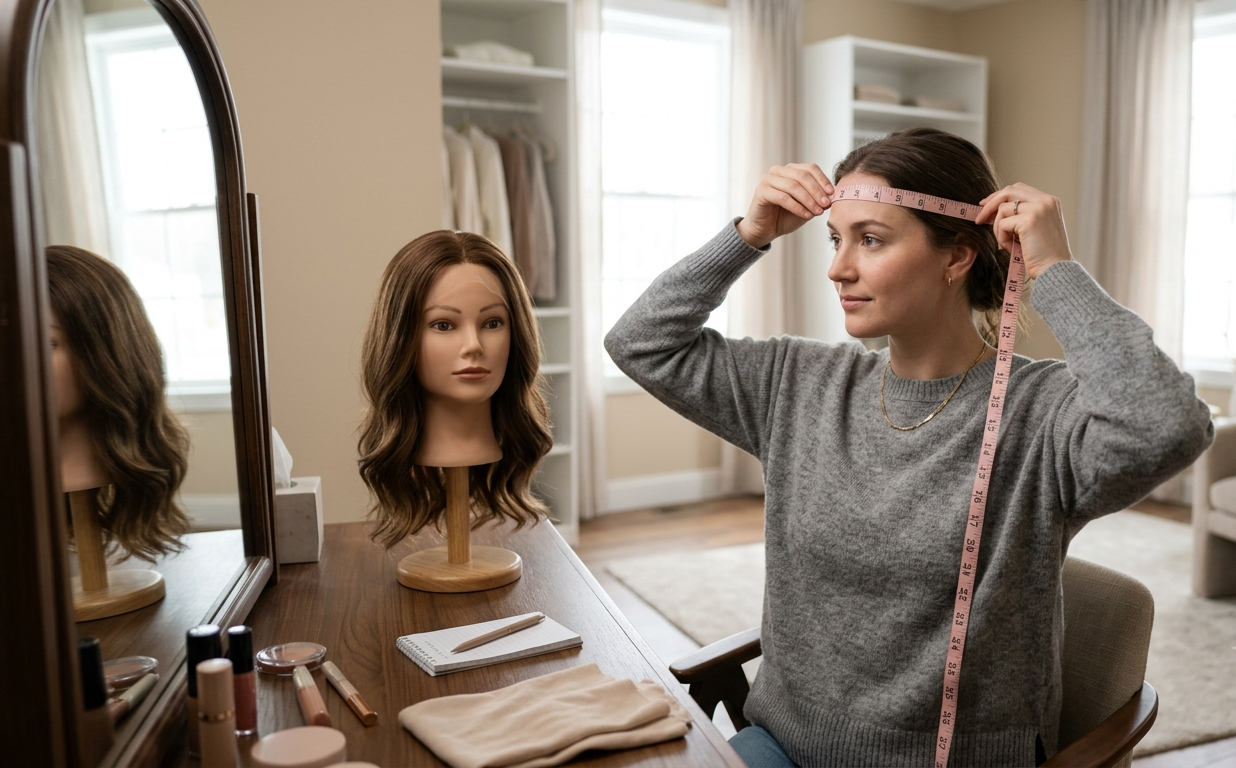
A wig that's the wrong size is the single biggest reason people end up disappointed. Head shape changes with hair loss, so it's worth measuring properly rather than guessing from a "one size fits most" label.
4. Try before you commit, if you can
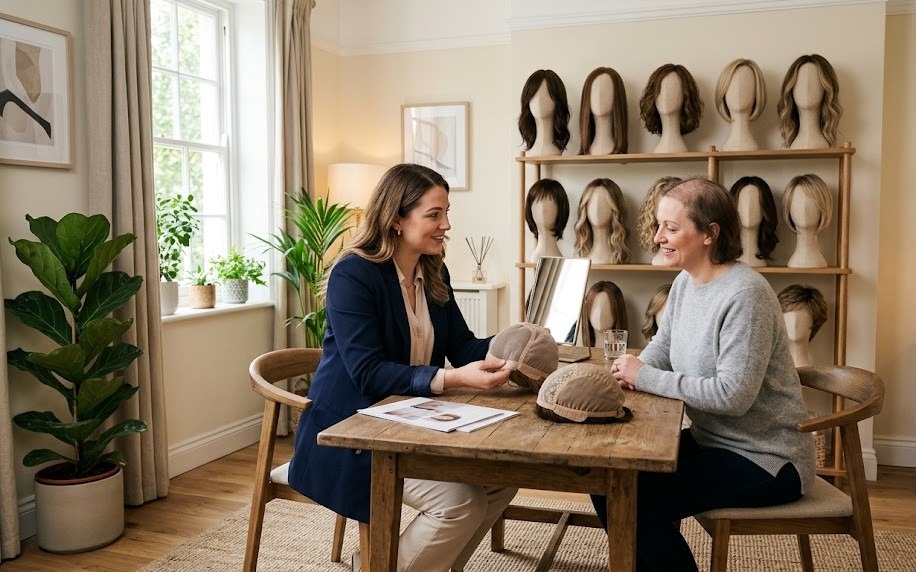
If you're unsure, our wig consultation service is built exactly for this — a chance to talk through your hair loss, try options, and get a recommendation suited to your head shape and lifestyle, not just what's popular.
Explore: MODE SILK Base Wigs · The Invisible Wig
Frequently Asked Questions
What is the best type of wig for alopecia?
There isn't a single "best" wig for alopecia — it depends on how much hair you've lost and how sensitive your scalp is. For total hair loss, most people find hand-tied or monofilament caps most comfortable, since there's no weft stitching against bare skin. For patchy or thinning hair, a wig that blends with your existing hair may work better than a full cap.
Are glueless wigs secure enough to wear all day?
Yes, when the cap is properly fitted. Glueless wigs stay in place using adjustable straps and the shape of the cap itself, rather than adhesive. Getting the size right is what makes the difference between a wig that feels secure and one that shifts during the day.
Will wearing a wig damage any hair I have left?
A well-fitted wig with a soft, breathable cap shouldn't damage remaining hair or irritate the scalp. Problems tend to come from wigs that are too tight, poorly ventilated, or rely on harsh adhesives, which is part of why cap construction matters so much for hair loss specifically.
How long do human hair wigs last with regular wear?
With proper care, a good-quality human hair wig typically lasts twelve to eighteen months of regular wear, though this varies with how often it's worn and how it's maintained. Synthetic wigs generally have a shorter lifespan but require less day-to-day care.
Can I wear a wig every day if I have a sensitive scalp?
Many people with sensitive scalps wear a wig daily, but the cap type matters. Breathable, hand-tied, or monofilament caps are generally more comfortable for extended daily wear than heavier, fully-wefted caps.
How do I know what size wig to order?
Head measurements (circumference, front-to-nape, and ear-to-ear) are the most reliable way to choose a size, rather than going by a standard "small, medium, large." If you're not sure how to measure or what the numbers mean, our consultation service can talk you through it.
Do you offer wigs for total hair loss, like alopecia totalis or universalis?
Yes. Our alopecia and medical hair loss ranges are chosen specifically with total hair loss in mind, including cap types that don't rely on any remaining hair for grip or fit.
Can I speak to someone before I buy?
Yes — we offer a wig consultation for anyone who'd rather talk it through first. There's no pressure to buy; it's there to help you make a decision you feel good about.
What Our Customers Say
Customer stories coming soon.
Visit or Contact Moramode
We're a small, independent business, and every wig donation, consultation, and order is handled by people who understand what hair loss means beyond the product itself. Each month, we also donate a free wig to a child under 16 experiencing medical hair loss (chemotherapy, alopecia, or another medical cause), verified through a medical professional referral — you can read more on our wig donation page.
Get in touch:
72 McLeod Road, Abbey Wood, London SE2 0BS
Email: info@moramode.com
Phone: 07593 351291
Moramode Ltd, registered in England & Wales, Company No. 11454071.
|